
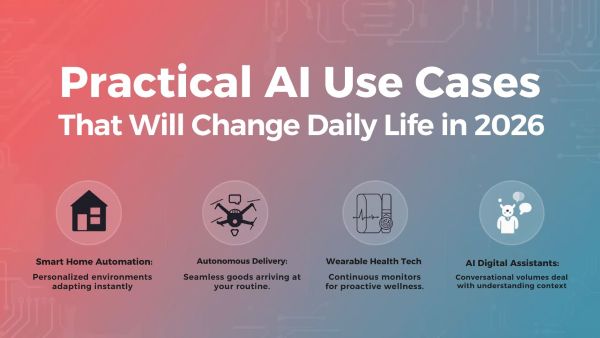
Practical AI Use Cases That Will Change Daily Life in 2026
AI use cases are transforming everyday life faster than ever. In 2026, artificial intelligence will impact how we work, learn, travel, and manage our health. From smart assistants to predictive analytics, understanding practical AI use cases can help individuals and businesses adapt and thrive in a digital-first world.
1. AI in Healthcare
AI is revolutionizing healthcare with tools that improve diagnosis, treatment, and patient care:
-
Predictive diagnostics: AI algorithms detect diseases like diabetes and cancer earlier than traditional methods.
-
Virtual health assistants: Chatbots provide guidance, reminders, and basic health monitoring.
-
Personalized medicine: AI analyzes genetic and lifestyle data to suggest treatments tailored to each individual.
2. AI-Powered Smart Homes
Smart home technologies are becoming more intelligent, using AI to simplify daily routines:
-
Voice-controlled assistants: Devices like smart speakers manage tasks and provide information instantly.
-
Energy optimization: AI regulates heating, cooling, and lighting for efficiency and savings.
-
Home security: AI-enabled cameras detect unusual activity and alert homeowners in real-time.
3. AI in Transportation
Transportation is becoming safer and more efficient with AI:
-
Self-driving cars: AI systems navigate roads, reduce accidents, and optimize traffic flow.
-
Predictive maintenance: Vehicles and public transport systems use AI to anticipate repairs.
-
Smart logistics: Delivery and ride-sharing platforms use AI to plan the fastest routes.
4. AI in Education
Education is being reshaped through AI-powered tools:
-
Adaptive learning platforms: AI customizes lessons to student progress and learning style.
-
Virtual tutors: Chatbots provide instant support and explanations.
-
Skill assessments: AI evaluates performance and suggests improvements.
5. AI in Work and Productivity
AI is helping professionals save time and make smarter decisions:
-
Automated workflows: AI handles repetitive tasks like scheduling, data entry, and reporting.
-
Decision support systems: AI analyzes data to help managers make informed choices.
-
Content generation: AI tools create reports, emails, and marketing materials efficiently.
6. AI in Daily Shopping and Personalization
AI enhances consumer experiences by offering smarter recommendations:
-
Personalized shopping: AI analyzes preferences and suggests products.
-
Voice shopping: Smart assistants enable effortless voice-based purchases.
-
Inventory optimization: Retailers use AI to predict demand and reduce waste.
Challenges of AI in Daily Life
While AI provides incredible benefits, there are some challenges:
-
Privacy concerns: Handling personal data responsibly is crucial.
-
Bias in AI algorithms: Systems must be monitored to prevent unfair decision-making.
-
Accessibility: Ensuring AI technologies are available to all communities is important.
FAQs About AI Use Cases
Q1: What are AI use cases in daily life?
A1: AI use cases in daily life include healthcare, smart homes, transportation, education, productivity, and personalized shopping.
Q2: How will AI change work in 2026?
A2: AI will automate repetitive tasks, assist decision-making, and boost productivity, allowing humans to focus on creative and strategic work.
Q3: Is AI safe to use in personal and professional settings?
A3: Yes, when used responsibly. Ethical guidelines, privacy protections, and monitoring reduce risks of misuse.
Q4: Can AI help save money at home?
A4: Absolutely. AI in smart homes can optimize energy use, automate purchases, and reduce unnecessary expenses.
Q5: Do I need technical skills to benefit from AI?
A5: No, most AI-powered tools are designed for everyday users, providing value without requiring advanced technical knowledge.
Check Our Latest Uploads
Web 4.0 Explained: What It Is & Why It Matters in 2026
Best AI Tools for 2026 You’ll Actually Use Daily
AI Tools Replacing Popular Apps in 2026: The Future of Smart Digital Workflows